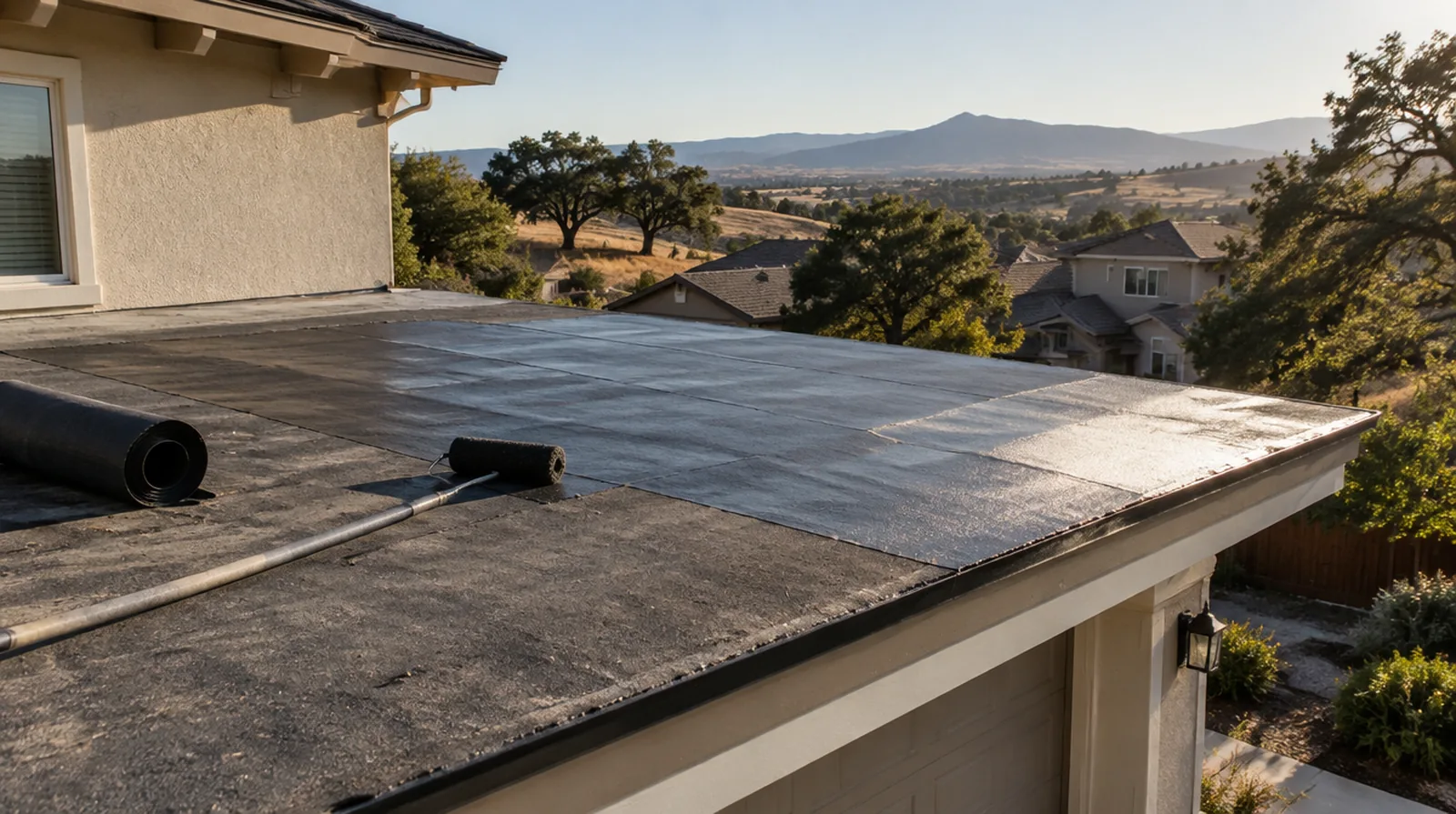
Flat roof repair problems we see in Lincoln
Low-slope roofs here deal with intense summer heat followed by winter rain. Membranes dry out and crack, seams separate, and blisters form where moisture is trapped beneath. Ponding water, where rain sits for days after a storm, speeds up all of that wear. On older roll roofing, the surface may look worn and gray, with cracks at edges and around vents.
Where a flat section meets a stucco wall or a sloped roof, flashing is a frequent problem. That transition takes a lot of water and is easy to get wrong.
How we repair flat roofs
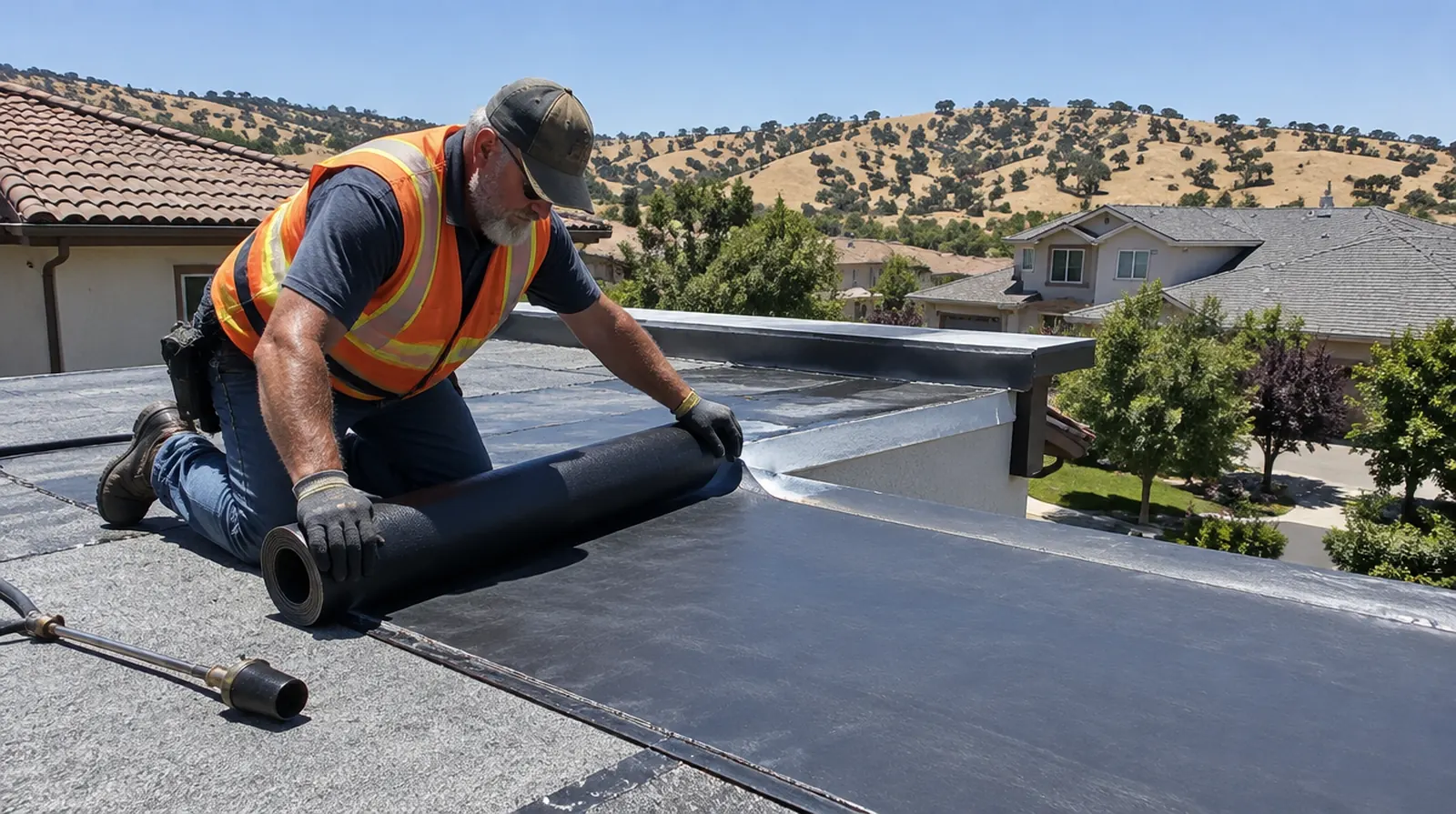
We start by inspecting the whole low-slope section, not just the spot that leaked. We check seams, edges, drains, scuppers and penetrations, and probe for soft areas that suggest wet insulation or deck underneath. Then we explain what we found and recommend a repair.
Small failures are patched with materials that match the existing membrane, whether that is modified bitumen, TPO or roll roofing. Failed seams are cleaned and rewelded or resealed. At walls and transitions, we rebuild flashing so water runs off rather than behind it. When ponding is the root cause, we can add tapered material, improve a drain or add a scupper.
Repair or replace a flat roof?
If the membrane is still flexible and damage is limited, a repair is good value. If the surface is brittle, has many old patches, or water has soaked into the insulation, replacement is usually the better choice. We show you photos and walk you through the reasoning.
Flat roof repair and Lincoln's summer sun
A low-slope roof takes direct sun for most of the day. Over time, that heat breaks down membranes and coatings. Reflective coatings, applied to a sound membrane, can help reduce surface temperature and extend life. We will tell you honestly whether a coating makes sense for your roof or if repairs need to come first.
Equipment on low-slope roofs
Some homes have AC units or evaporative coolers on a flat section. Their stands, drain lines and service visits wear the membrane. We check around equipment carefully and can add walkway pads to protect the surface during future maintenance.
Timing your repair
Fall is ideal, before the first storm. We can repair low-slope roofs year-round whenever the surface is dry enough for materials to bond, and we can temporarily seal a leak during wet weather.
Patio and porch covers
Many of the flat sections we repair are patio covers attached to the house. The connection to the main wall or roof is often the weak point, and runoff onto walkways is a common complaint. We check that connection and the drainage path whenever we work on one.
Low-slope roofs on older downtown homes
Some older houses near downtown have rear additions or enclosed porches with nearly flat roofs, often covered in layers of roll roofing. Those can hide soft decking. We probe carefully, explain what we find and recommend a proper membrane when the old layers are past saving. Where the addition ties into the main roof, we rebuild the transition so it sheds water cleanly.
Drainage paths off the low-slope section
Water on a flat roof has to go somewhere, usually a scupper, an edge gutter or an internal drain. When any of those clog with leaves or acorns, water backs up and finds a seam. During every repair, we clear and test the drainage path and suggest small changes, like a larger scupper or a better gutter outlet, that help the roof empty quickly after rain.
Flat roof repair FAQs
How long does a flat roof repair take?
Most repairs are done in a few hours to a day.
Can you fix ponding water?
Often, yes, by adding slope, a drain or a scupper.
Do you work on patio covers?
Yes, including where they tie into the house.
How do I schedule?
Call (916) 314-6771.
Have a low-slope leak?
Call (916) 314-6771 for a free flat roof repair look.