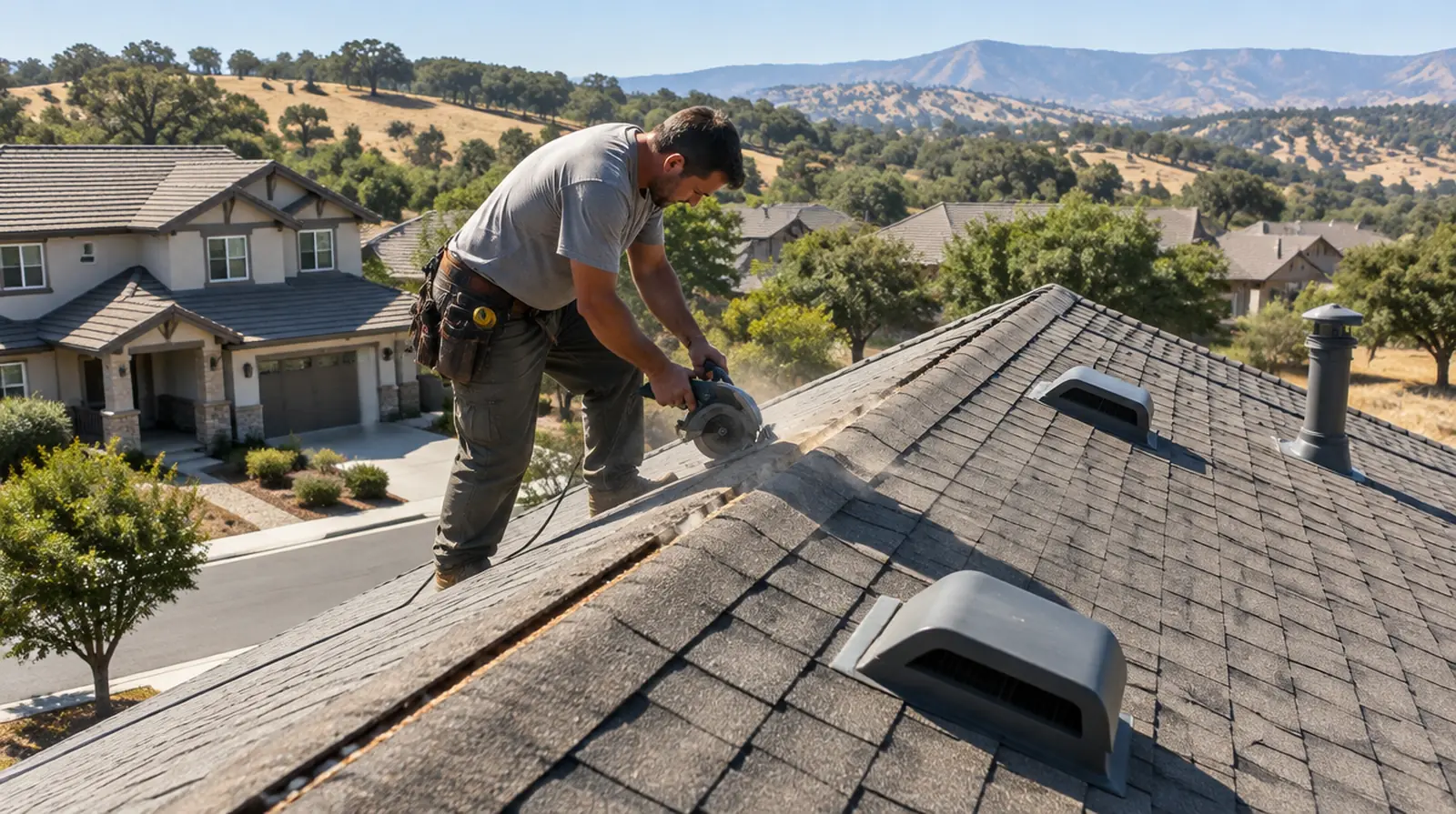
Why roof ventilation matters in Lincoln
A roof absorbs a lot of heat on summer afternoons. Without proper ventilation, that heat builds up in the attic and has nowhere to go. It shortens shingle life, makes air conditioners work harder and can leave upstairs bedrooms uncomfortable well into the evening. In winter, poor airflow can trap moisture from inside the house, leading to condensation, damp insulation and mildew.
Many Lincoln homes were built with too little intake at the soffits, or with soffit vents later covered by insulation. Some have mixed exhaust types, like a ridge vent and a gable fan working against each other. These are common and fixable.
How we evaluate attic airflow
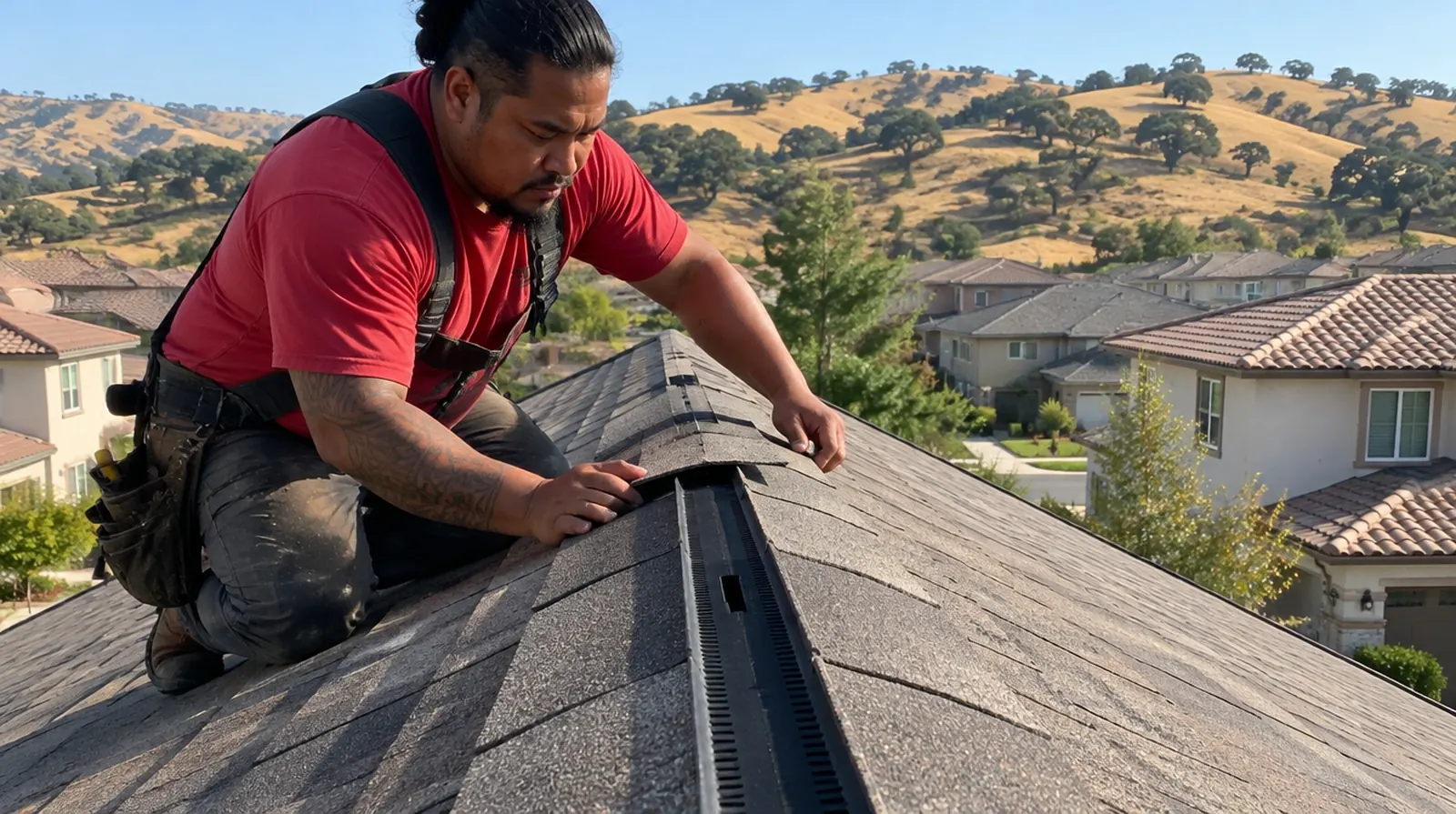
We start in the attic, checking for heat buildup, stains, rusted nails, damp insulation and blocked soffits. We measure the attic area and count existing intake and exhaust. On the roof, we look at vent types, locations and condition.
Then we recommend a balanced setup: enough intake low on the roof and enough exhaust high, working together. That may mean opening or adding soffit vents, installing baffles so insulation does not block airflow, adding a ridge vent or replacing old box vents.
Roof ventilation types we install
- Ridge vents. Continuous exhaust along the peak, often the best option on shingle roofs.
- Soffit vents. Intake at the eaves, essential for any balanced system.
- Off-ridge and box vents. Useful where a ridge vent does not fit.
- Tile-compatible vents. Low-profile vents designed to sit under tile.
Ventilation and new roofs
A roof replacement is the best time to correct ventilation, since the deck is exposed and a ridge vent can be cut in easily. We include a ventilation check in every replacement. Learn more about asphalt shingle installs, where ventilation plays a big role in how long the roof lasts.
Signs of poor ventilation
Very hot upstairs rooms, shingles that curl early, rust on nail tips in the attic and musty smells after rain all point to airflow problems. If you see water stains, it may be condensation rather than a roof leak, though our leak repair team can confirm the cause.
Comfort upstairs
Two-story homes in Lincoln often have a hot second floor. A well-ventilated attic keeps the ceiling above those rooms cooler, so the air conditioner does not have to fight the roof all evening. Pairing ventilation with sealed ceiling gaps and adequate insulation gives the best result.
When to schedule ventilation work
The ideal time is during a reroof. Soffit openings, baffles and many roof vents can be added any time, though, and doing it before summer lets you feel the difference right away.
Moisture and winter fog
Ventilation is not only a summer issue. In winter, cool, damp air and long stretches of tule fog mean warm, humid air from the house can condense on the underside of the roof deck if the attic does not move air. That moisture shows up as dark stains on sheathing, rusty nail tips and damp insulation. Balanced airflow lets that moisture escape before it causes damage.
Bath and kitchen fans
We also check that bath and kitchen exhaust fans vent outside rather than into the attic, a common problem that adds moisture overhead.
Ventilation on single-story homes
Low, wide single-story roofs in Lincoln's active-adult communities often have long eaves and broad attic spaces. They can still trap a lot of heat if soffit intake is blocked or exhaust is undersized. We check both and suggest the simplest fix that balances the airflow.
Roof ventilation FAQs
Can I add a ridge vent without a new roof?
Often, yes, on shingle roofs.
Do tile roofs need ventilation?
Yes. We use vents made to work under tile.
Will better ventilation lower cooling costs?
It can help reduce attic heat, which affects how hard your AC works.
How do I schedule?
Call (916) 314-6771.
Want the attic to breathe?
Call (916) 314-6771 for a roof ventilation look and estimate.